Tuesday, 07 November 2023
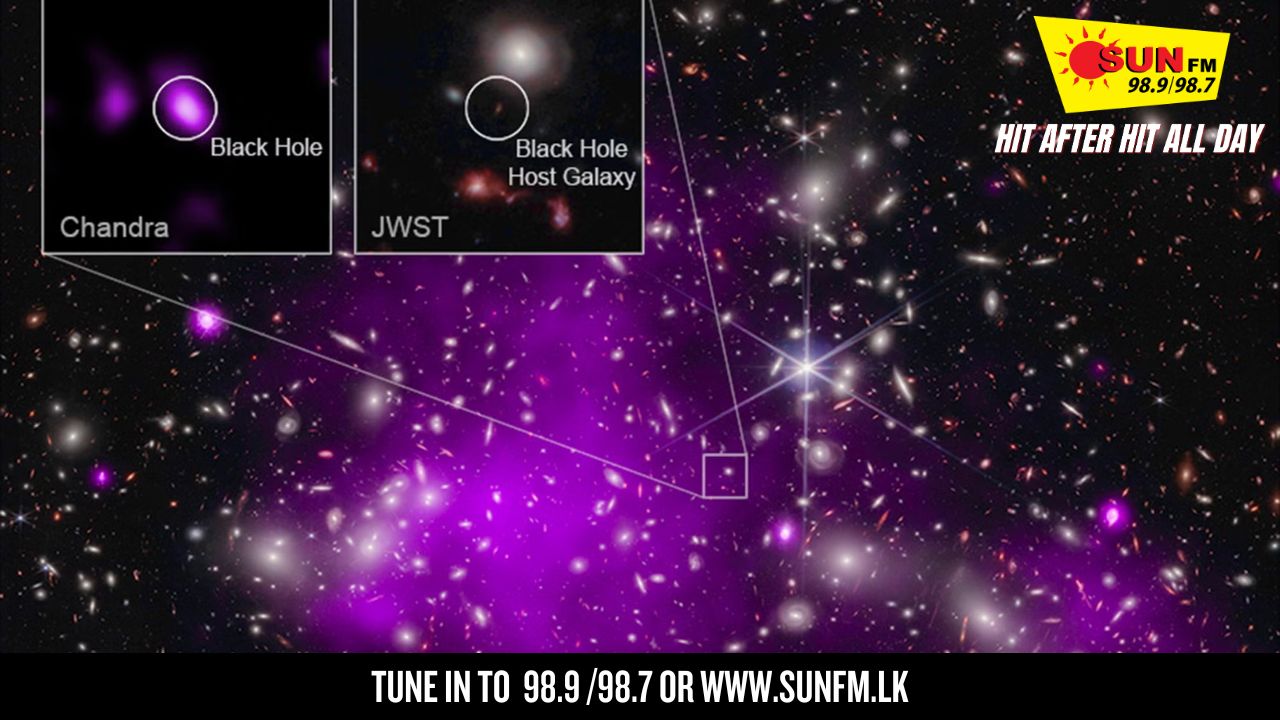
Researchers believe they've stumbled upon the most ancient black hole ever identified.
NASA deployed its Chandra and JWST space telescopes to scrutinize a distant galaxy situated in the outer realms of the universe. In the course of this cosmic investigation, they made a staggering revelation. But before we delve into the details, let's demystify what a black hole is—beyond the enigmatic space anomaly that many of us once feared would swallow us whole (yes, it was a genuine concern).
According to NASA, a black hole is a concentrated mass of material confined within an incredibly minuscule space, exhibiting a gravitational force so intense that not even light can break free from its grasp.
These enigmatic entities come in two flavors: stellar-mass and supermassive.
Stellar-mass black holes range from three to dozens of times the mass of our Sun, scattered across the expanse of our Milky Way galaxy.
On the other hand, the supermassive counterparts tip the scales at 100,000 to billions of times the mass of the Sun and typically reside at the cores of massive galaxies, including our own.
The recently unearthed black hole is a colossal supermassive variant, boasting a mass approximately equivalent to the combined mass of all the stars within its galactic abode.





.jpg)
.jpg)





.jpg)