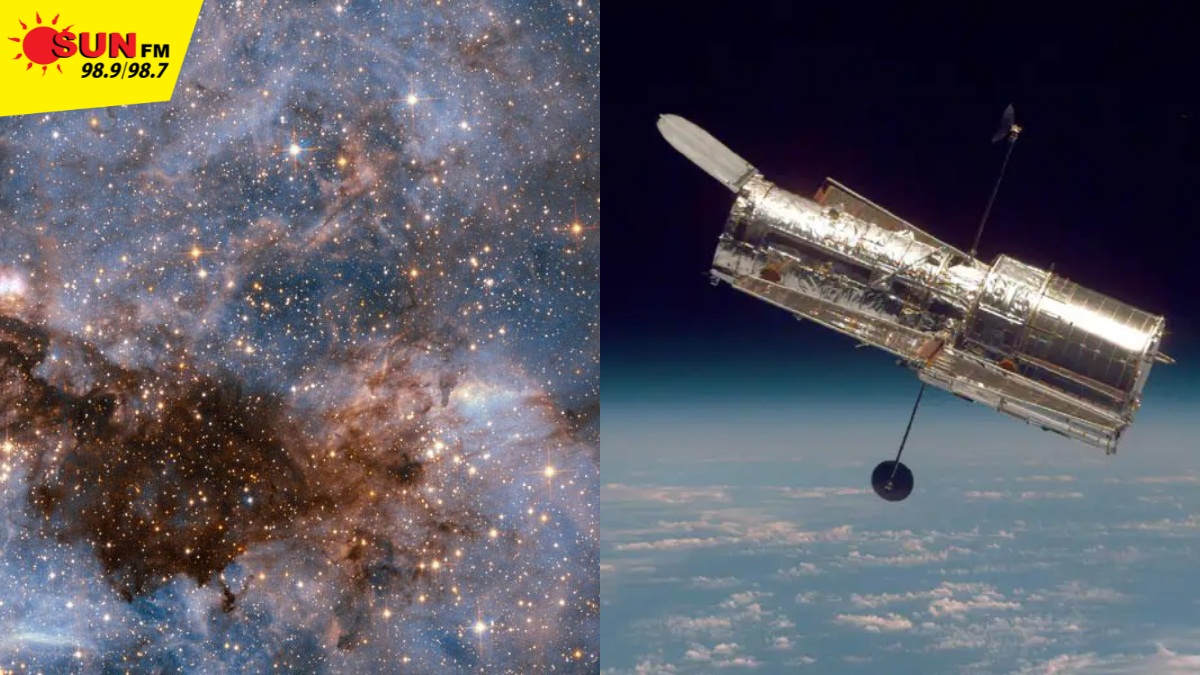
THE HUBBLE SPACE TELESCOPE AIDS IN THE DISCOVERY OF SIX "DEAD" GALAXIES!
Monday, 27 September 2021
Large galaxies in the early universe would seem to have enough of 'fuel' for new stars, but a recent discovery reveals that wasn't always the case. Astronomers using the Hubble Space Telescope and the Atacama Large Millimeter/Submillimeter Array (ALMA) discovered six early galaxies that were particularly "dead" — that is, they'd ran out of the cold hydrogen needed for star formation — roughly 3 billion years after the Big Bang. According to lead researcher Kate Whitaker, this was the peak period for star births, thus the loss of that hydrogen is puzzling.
Strong gravitational lensing, which uses galaxy clusters to bend and amplify light from the early cosmos, helped the team find the galaxies. ALMA found cold dust (a stand-in for hydrogen) to identify where stars would have formed if the essential ingredients had been present, while Hubble determined where stars had formed in the past.
Since then, galaxies are thought to have expanded, but not through the birth of new stars. Instead, they expanded by merging with other tiny galaxies and gas. After that, any formation would have been minimal at best.
Scientists don't know why the galaxies died so swiftly, or what happened to cut off the fuel supply, according to Whitaker. Was the gas heated, ejected, or simply consumed quickly? Answers may take some time to come, if they can be found at all.





.jpg)
.jpg)
.jpg)