




[email protected]
Sun FM Gossip
.jpg)
Tuesday, 22 September 2026
.jpg)
Tuesday, 22 September 2026




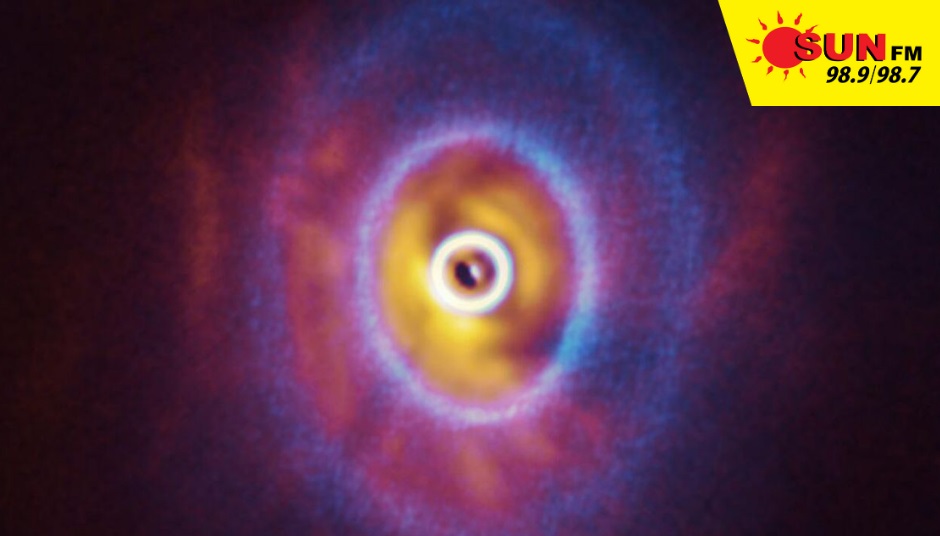


Among the most complex cosmic dances that astronomers have ever seen, the three rings of gas and the circle of dust are three stars.
GW Orionis, a galaxy about 1,300 light-years away in the Orion galaxy, locks a pair of young stars in close-up do-si-do, with the third star orbiting both. Around all three stars is a broken-disk of dust and gas that could one day form planets. Unlike the flat disk that led to the planets in our solar system, the GW Orionis disk consisted of three spirals in which one deflected middle ring and the inner ring were twisted at an angle to the other two.
The bizarre geometry of this system, first known, is reported by two groups of astronomers in two recent studies. But how GW Orionis came to be is a mystery, and both teams offer ideas that will compete for the birth of the three-star-and-ring system.
Astronomers have seen gas and dusty disks orbiting binary star systems, but not more than two stars (SN: 7/30/14). About half the stars in the galaxy have at least one galaxy, and their planets often orbit with respect to their stars, orbiting more like a jump rope than the hula-hoop (SN: 11/1/13). That misalignment may appear with the planets' birth disk: if the disk is heard, the planets will be too.
.jpg)