Monday, 14 September 2020
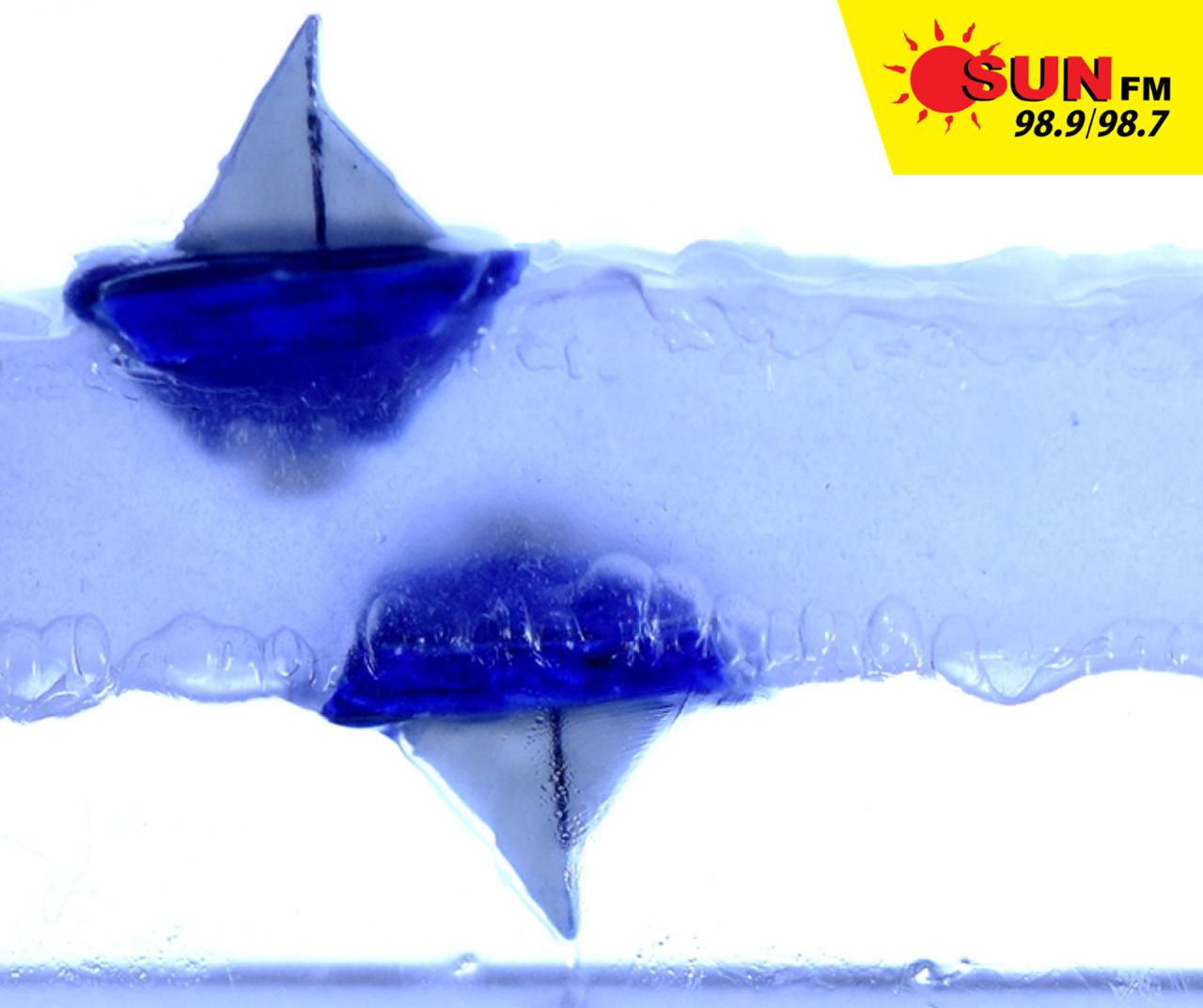
Going bottom-up is no problem for a boat on the underside of a levitated liquid.
In a container, the liquid can be levitated over a layer of gas by shaking the container up and down because the repeated, upward jerking motion keeps fluid from dripping into the air below. Lab experiments have revealed a curious consequence of this antigravity effect. Objects can float along the bottom of a hovering liquid as well as along the top, researchers report in the Sept. 3 Nature.
Physicist Emmanuel Fort and colleagues observed this effect by injecting a layer of gas underneath either silicone oil or glycerol and shaking the container. The researchers used these thick substances because keeping a liquid aloft requires vigorous shaking — with larger pools requiring stronger vibrations — and a runny fluid like water would slosh around too much to form a stable, levitated layer.
Physicists knew it was possible to keep a layer of liquid levitated over a cushion of air by vigorously shaking the layers up and down in a container. But new lab experiments have revealed a surprising effect of that antigravity trick. Toy boats and other objects are able to float along the bottom surface of a levitated liquid as well as it's top.
A partially submerged, upside-down boat experiences an upward pull. As a result, if the right amount of the boat is submerged, the force of buoyancy is strong enough to counteract the gravity pulling the boat down, and the boat floats.
Toy boats at the top and bottom surfaces of a levitated liquid are partially submerged in liquid, and so experience the upward force of buoyancy. That force counteracts the downward pull of gravity, allowing the toys to float on both sides of the liquid’s surface.





.jpg)
.jpg)
.jpg)