500 MILLION-YEAR-OLD 'SOCIAL NETWORK' MAY HAVE HELPED SEA MONSTERS IN CLONING THEMSELVES
Monday, 31 August 2020
Some of the most ancient animals on Earth may have used social networks to chat with each other, review food, and more.
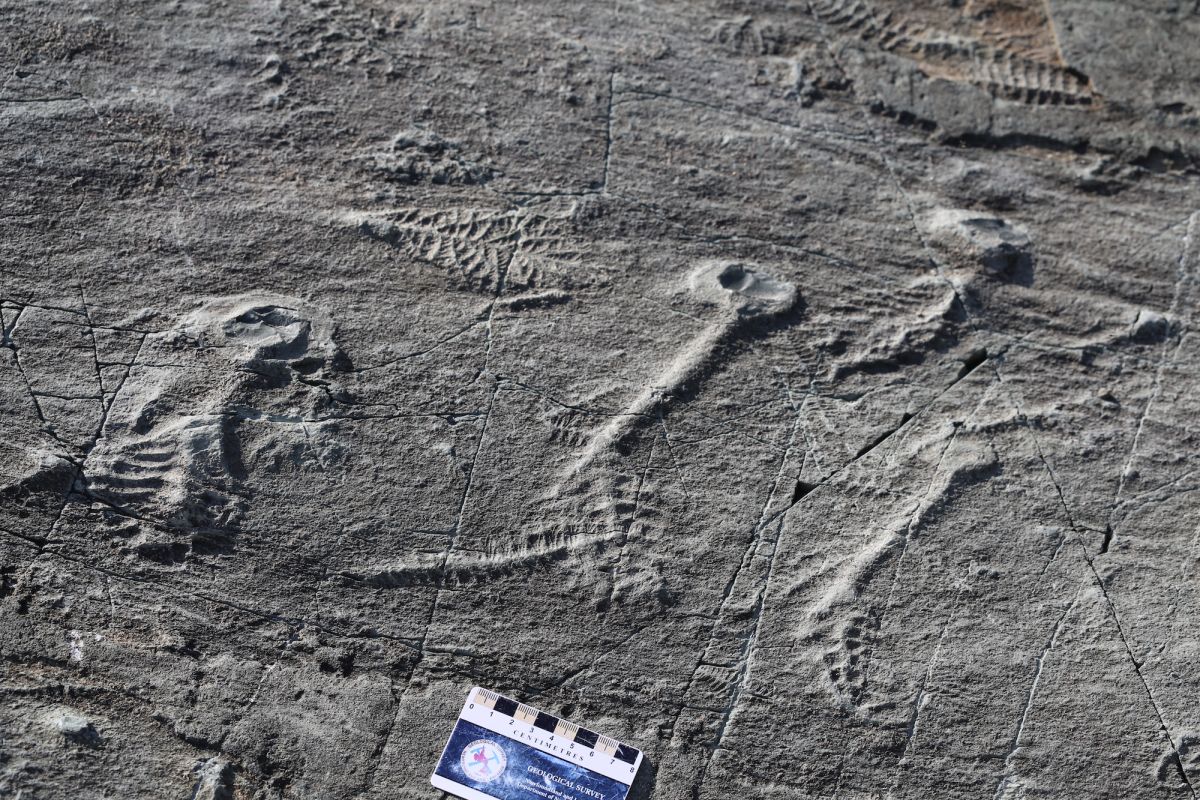
A study published in the journal Current Biology showed researchers examining hundreds of rangeomorphs; strange, fern-like animals that habituated in large groups or colonies at the bottom of the ocean from about 571 million to 541 million years ago which are fossilized along the coast of Newfoundland, Canada. To the researcher’s surprise, plenty of the fossil specimens seem to be adjoined to each other by long, string-like filaments never before seen among animals this ancient.
Filaments varied in length anywhere from a few inches to 13 feet (4 meters) in length and connected rangeomorphs from seven different species, forming what lead study author Alexander Liu called a primitive "social network" of deep-sea dwellers.
"These organisms seem to have been able to quickly colonize the seafloor, and we often see one dominant species on these fossil beds," Liu, a professor at the University of Cambridge's Department of Earth Sciences, said in a statement. "These filaments may explain how they were able to do that."
Scientists think the creatures dug into the mud on the ocean floor, passively sucking nutrients out of the water using symmetrical, leaf-like branches. You could reasonably call rangeomorphs the "mighty morphin' flower rangers" of the Ediacaran and annoy only a few scientists in the process.
Although, the role of their filaments as a “network” still remains a mystery. In the end, further study of rangeomorph fossils is required to unravel the mystery of these filaments which seem to be password-protected.





.jpg)
.jpg)
.jpg)