




[email protected]
Sun FM Gossip
.jpg)
Thursday, 24 September 2026
.jpg)
Thursday, 24 September 2026
.jpg)
Thursday, 24 September 2026




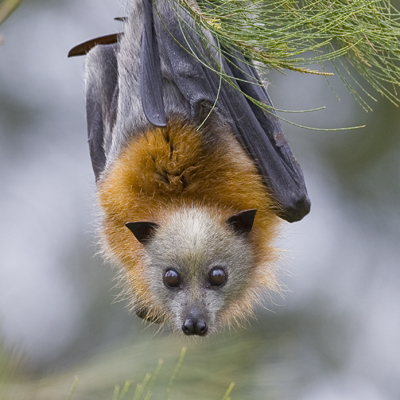


Australia’s flying foxes are almost 1 kilogram heavy with a meter-wide wingspan. However, instead of hunting like other bats, they nocturnally scavenge flowers in search of nectar, pollen, and seeds. By day, they screech by the thousands in trees.
Initially, researchers thought these bats were found endemically and loyal to a particular roost. However, when they put satellite transmitters on 201 bats from three species in eastern Australia, they found they were mistaken: From months of tracking each bat, they calculated that the bats wandered anywhere from 1487 to 6073 kilometers per year, they report today in BMC Biology.
The black flying fox (Pteropus Alecto) had the shortest range, followed by the gray-headed flying fox (P. poliocephalus, above), and the little red flying fox (P. scapulatus). The little red flying fox traveled an estimated 5000 kilometers per year—farther than mammalian well-known migrators such as caribou, which travel 1200 kilometers per year, and wildebeest, which migrate 2900 kilometers with each trip.
Rather than following a seasonally set path, flying foxes seem to roam randomly, supposedly in search of newly flowering species. The little red flying fox, for example, travels 1300 kilometers north to south, but not constantly. Instead, it crisscrosses its range and settles in short periods in dozens of different roosts, whose populations change inconsistently based on the new migrants. In total, bats in the study visited 755 roosts, more than half of which were unknown to scientists.
Given that these furry fliers are pivotal to dispersing seeds and pollen, their roaming help “connect” forests destroyed by fire or human activity, the researchers say.