Wednesday, 19 August 2020
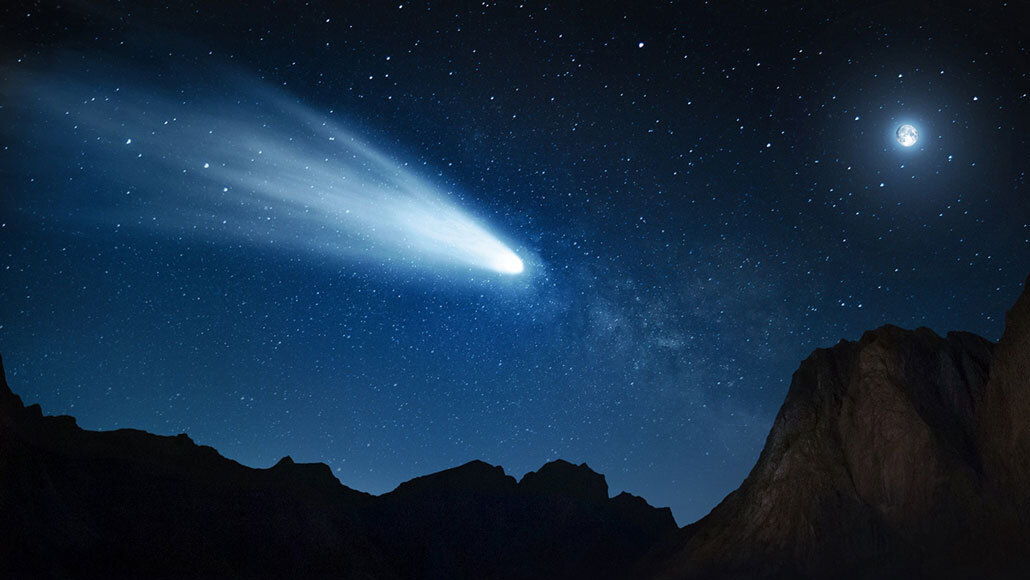
Like the mythical half-human, half-horse creatures of Greek mythology, the centaurs in the solar system are hybrids between asteroids and comets. Currently, astronomers have caught one type of space rock transforming to the other, possibly giving scientists a chance to watch a comet come into creation in real-time in the decades to come.
The object, called P/2019 LD2, was found by the ATLAS telescope in Hawaii in May. There is evidence to show from its orbit that hints to being a centaur- a class of rocky and icy objects with unstable orbits. As a result of its mixed composition and capability to travel around the solar system, astronomers have long guessed that centaurs are a missing link between small icy bodies in the Kuiper Belt beyond Neptune and comets that usually travel to the inner solar system.
These “short-period” comets, which were considered to emerge from icy objects in the Kuiper Belt, orbit the sun once every 10 years or so, and make recurrent appearances in Earth’s skies. (Long-period comets, like Halley’s Comet, which travels to the inner solar system once every 100 years, probably originated even farther from the sun, in the Oort cloud.)
The LD2 just came in from the Kuiper Belt recently and will become a comet in as little as 43 years, researchers reported.
After hearing about LD2, researchers simulated thousands of possible trajectories to observe where the object had originated and where it supposed to travel. LD2’s orbit possibly brought it close to Saturn around 1850, and it entered its current orbital space past Jupiter after a close meeting with the gas giant in 2017, the team found. The object will leave its current orbit and travel toward the sun in 2063, where heat given off from the sun will likely sublimate LD2’s volatile elements, resulting in a bright cometary tail, the researchers say.