Sunday, 09 August 2020
A conclusive study led by UC Riverside astrobiologist Stephen Kane was recently published in the Astronomical Journal.
The search for any organic life outside earth is typically focused on what scientists call the "habitable zone," this is essentially the area around a star that is an orbiting planet that could have liquid water oceans which are required for life.
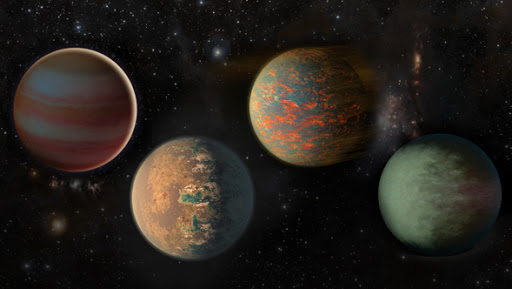
Kane was studying a nearby solar system called Trappist-1 that had 3 planets that were similar to earth in its habitable zone.
Kane and his team formed a simulation of a model system with planets of different sizes their stars. Gravitational forces were taken into account with the help of an algorithm and aided in the test on how the planets corresponded with each other over millions of years.
To their surprise, they found out that it was possible for some of these stars to support life on at least seven planets, and that our sun had the potential to host at least six planets with liquid water.
Why is it that does our solar system having one habitable planet if it has the capability to host at least six? Evidently, if the planets' movement is more circular than oval or irregular, it minimizes any close contact and maintains stable orbits.
Kane believes that Jupiter, with a mass that is two-and-a-half times that of all the rest of the other planets in the solar system in conjunction, limited our system's habitability.





.jpg)
.jpg)
.jpg)